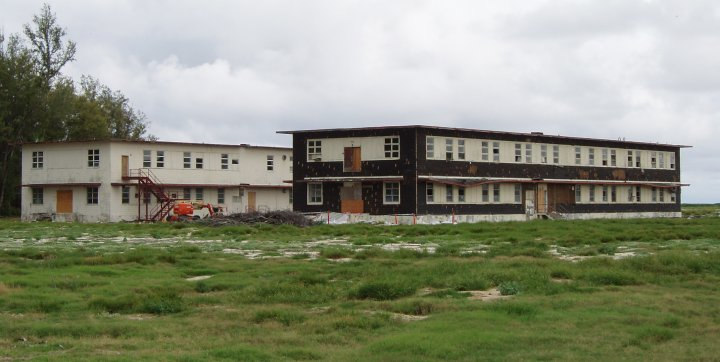
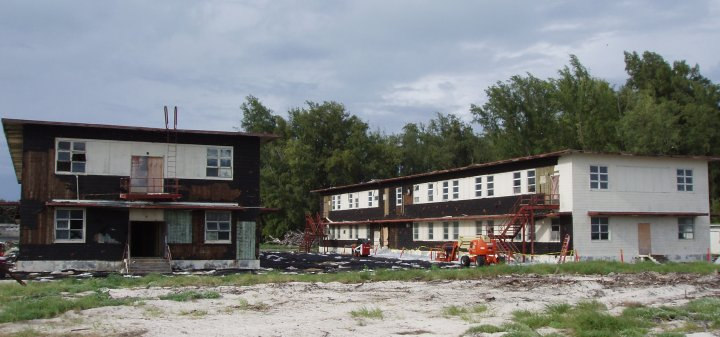
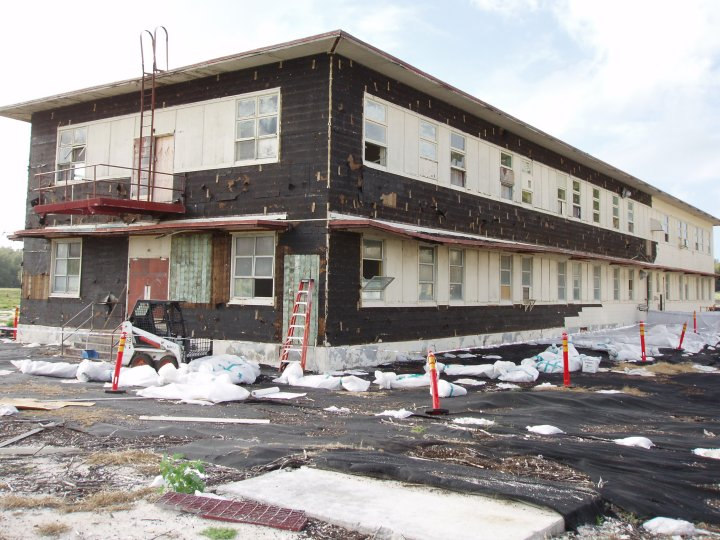
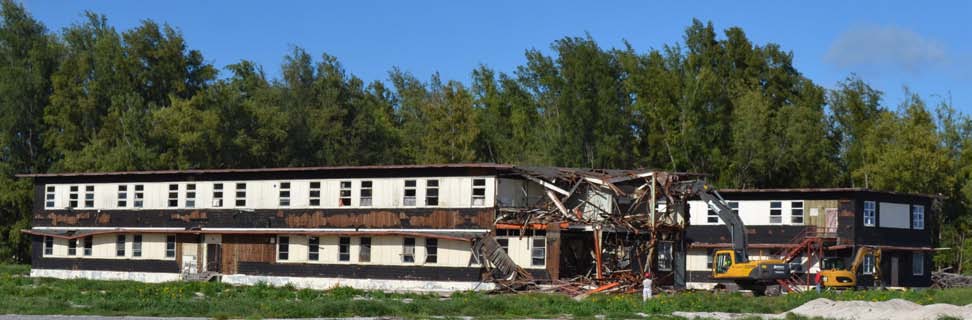
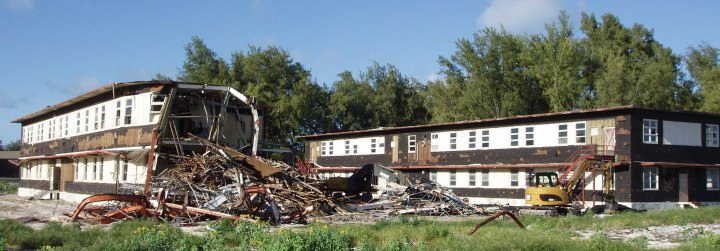
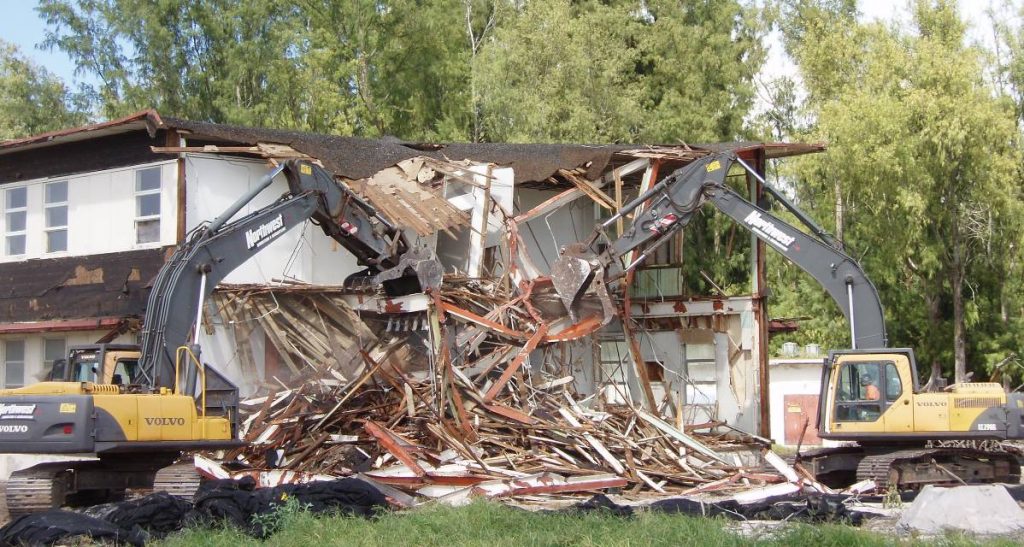
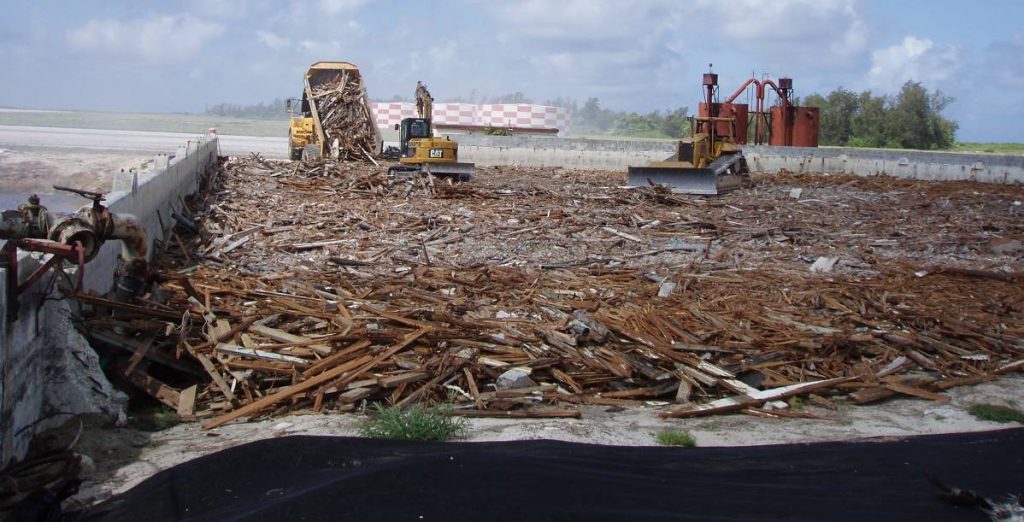
These historic structures were demolished without consultation with the IMMF, as required by Public Law.
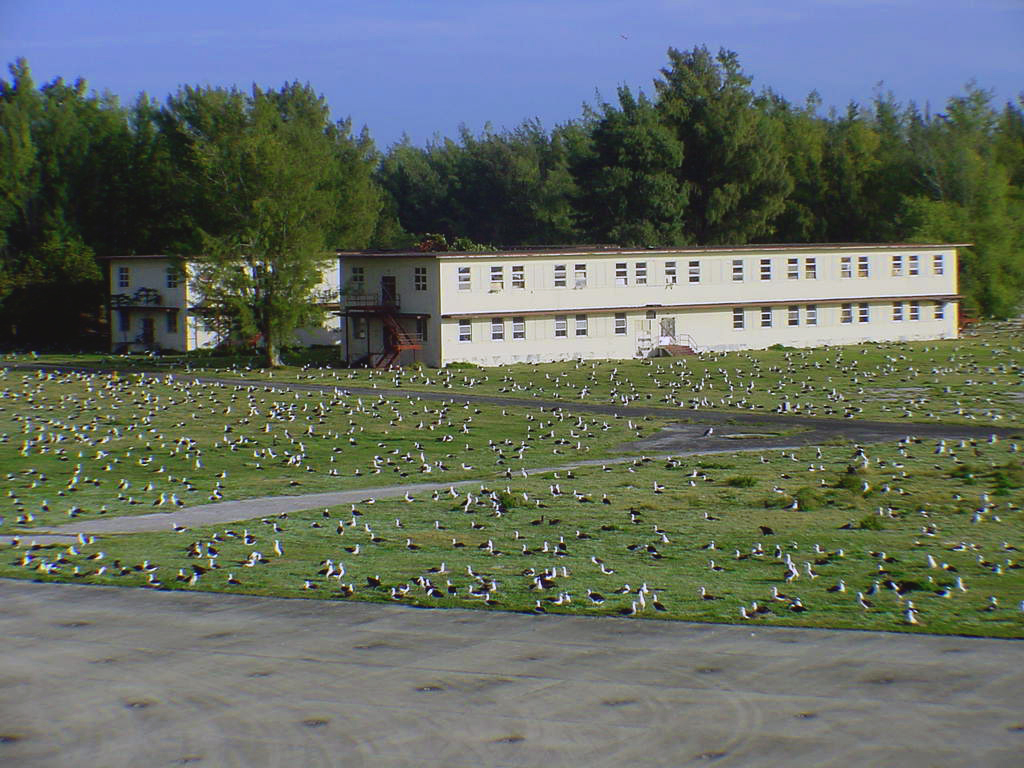
Midway Marine Barracks – Listed as a Historic Landmark – Prior to demolition
Photo Credit – NW Demolition and Environmental
Photo Credit – NW Demolition and EnvironmentalPhoto Credit – NW Demolition and Environmental
Photo Credit – NW Demolition and EnvironmentalPhoto Credit – NW Demolition and EnvironmentalPhoto Credit – NW Demolition and EnvironmentalPhoto Credit – NW Demolition and EnvironmentalPhoto Credit – NW Demolition and Environmental
2 thoughts on “Demolition of Historic Midway Marine Barracks”
I am trying to get information as to the status of the Marine officer’s mess on Midway Island during June, 1945. My father Paul Worsham was the company artist and painted a recreation of the flag raising on Iwo Jima and that painting was hung in the officer’s mess at that time. I have seen a “print” of this painting but I am trying to find out the location of the original. Does anyone have any information as to the whereabouts of this painting, or whom I might contact to learn more about what happened to it after the base was decommissioned?
To track down your father Paul Worsham’s original painting of the Iwo Jima flag raising, you will need to navigate military archives, specialized museum collections, and heritage groups. Because many artifacts from decommissioned military bases were redistributed or preserved by official entities rather than destroyed, several primary avenues exist for tracing it:
1. Official Marine Corps and Military Heritage Commands
When bases like the Marine operations on Midway were downsized or decommissioned, historical properties, custom artwork, and unit assets were routinely transferred to centralized heritage commands.
• The National Museum of the Marine Corps (Quantico, VA): The National Museum of the Marine Corps houses a massive inventory of combat and company art dating back to World War II. You can contact their Art Collection Curator or Registrar to see if the piece was logged into their permanent collection.
• Marine Corps History Division: Based out of Quantico, the Marine Corps History Division maintains unit records and command diaries. Researching the command diaries of the specific Marine unit (the company your father was the artist for) on Midway during June 1945 could reveal logs of property distribution when the unit deactivated or relocated.
2. Naval History and Heritage Command (NHHC)
Because Midway operated extensively under Naval jurisdiction, a significant amount of infrastructure property passed through Navy hands.
• The NHHC Curator Branch manages a vast collection of historic artifacts, including artwork from shore installations and mess halls. You can submit a research request through the Naval History and Heritage Command to verify if the painting was absorbed into Navy art archives.
3. Midway Atoll and National Wildlife Refuge Archives
The island is currently managed as the Midway Atoll National Wildlife Refuge and Battle of Midway National Memorial by the U.S. Fish and Wildlife Service (FWS).
• When the military completely vacated, certain historic murals and properties were left behind or preserved by the FWS. For example, other large World War II murals painted on the island (like those by Seabee Victor Nels Solander) were historically stabilized and transferred to venues like Pearl Harbor.
• You can reach out to the FWS Refuge Manager or the memorial’s cultural resources program to check if the painting was documented in historic building surveys before the old Marine Barracks structures were altered or demolished.
4. Veterans Groups and Midway Historians
• The Midway Island Community: Since you have already connected with the preservation community on the Midway Island Historic Website, continue monitoring responses to your posts. Veterans who served in later decades (such as the 1950s–1970s) can help narrow down the timeline of when the painting may have disappeared or moved from the mess facilities.
To help narrow down the search, do you know:
• The specific Marine unit or company number your father was assigned to?
• Any details about the “print” you saw (e.g., did it have a publisher stamp, a museum credit, or any writing on the back)?
Knowing the exact unit can help trace the exact path of the unit property maps.

I am trying to get information as to the status of the Marine officer’s mess on Midway Island during June, 1945. My father Paul Worsham was the company artist and painted a recreation of the flag raising on Iwo Jima and that painting was hung in the officer’s mess at that time. I have seen a “print” of this painting but I am trying to find out the location of the original. Does anyone have any information as to the whereabouts of this painting, or whom I might contact to learn more about what happened to it after the base was decommissioned?
To track down your father Paul Worsham’s original painting of the Iwo Jima flag raising, you will need to navigate military archives, specialized museum collections, and heritage groups. Because many artifacts from decommissioned military bases were redistributed or preserved by official entities rather than destroyed, several primary avenues exist for tracing it:
1. Official Marine Corps and Military Heritage Commands
When bases like the Marine operations on Midway were downsized or decommissioned, historical properties, custom artwork, and unit assets were routinely transferred to centralized heritage commands.
• The National Museum of the Marine Corps (Quantico, VA): The National Museum of the Marine Corps houses a massive inventory of combat and company art dating back to World War II. You can contact their Art Collection Curator or Registrar to see if the piece was logged into their permanent collection.
• Marine Corps History Division: Based out of Quantico, the Marine Corps History Division maintains unit records and command diaries. Researching the command diaries of the specific Marine unit (the company your father was the artist for) on Midway during June 1945 could reveal logs of property distribution when the unit deactivated or relocated.
2. Naval History and Heritage Command (NHHC)
Because Midway operated extensively under Naval jurisdiction, a significant amount of infrastructure property passed through Navy hands.
• The NHHC Curator Branch manages a vast collection of historic artifacts, including artwork from shore installations and mess halls. You can submit a research request through the Naval History and Heritage Command to verify if the painting was absorbed into Navy art archives.
3. Midway Atoll and National Wildlife Refuge Archives
The island is currently managed as the Midway Atoll National Wildlife Refuge and Battle of Midway National Memorial by the U.S. Fish and Wildlife Service (FWS).
• When the military completely vacated, certain historic murals and properties were left behind or preserved by the FWS. For example, other large World War II murals painted on the island (like those by Seabee Victor Nels Solander) were historically stabilized and transferred to venues like Pearl Harbor.
• You can reach out to the FWS Refuge Manager or the memorial’s cultural resources program to check if the painting was documented in historic building surveys before the old Marine Barracks structures were altered or demolished.
4. Veterans Groups and Midway Historians
• The Midway Island Community: Since you have already connected with the preservation community on the Midway Island Historic Website, continue monitoring responses to your posts. Veterans who served in later decades (such as the 1950s–1970s) can help narrow down the timeline of when the painting may have disappeared or moved from the mess facilities.
To help narrow down the search, do you know:
• The specific Marine unit or company number your father was assigned to?
• Any details about the “print” you saw (e.g., did it have a publisher stamp, a museum credit, or any writing on the back)?
Knowing the exact unit can help trace the exact path of the unit property maps.